

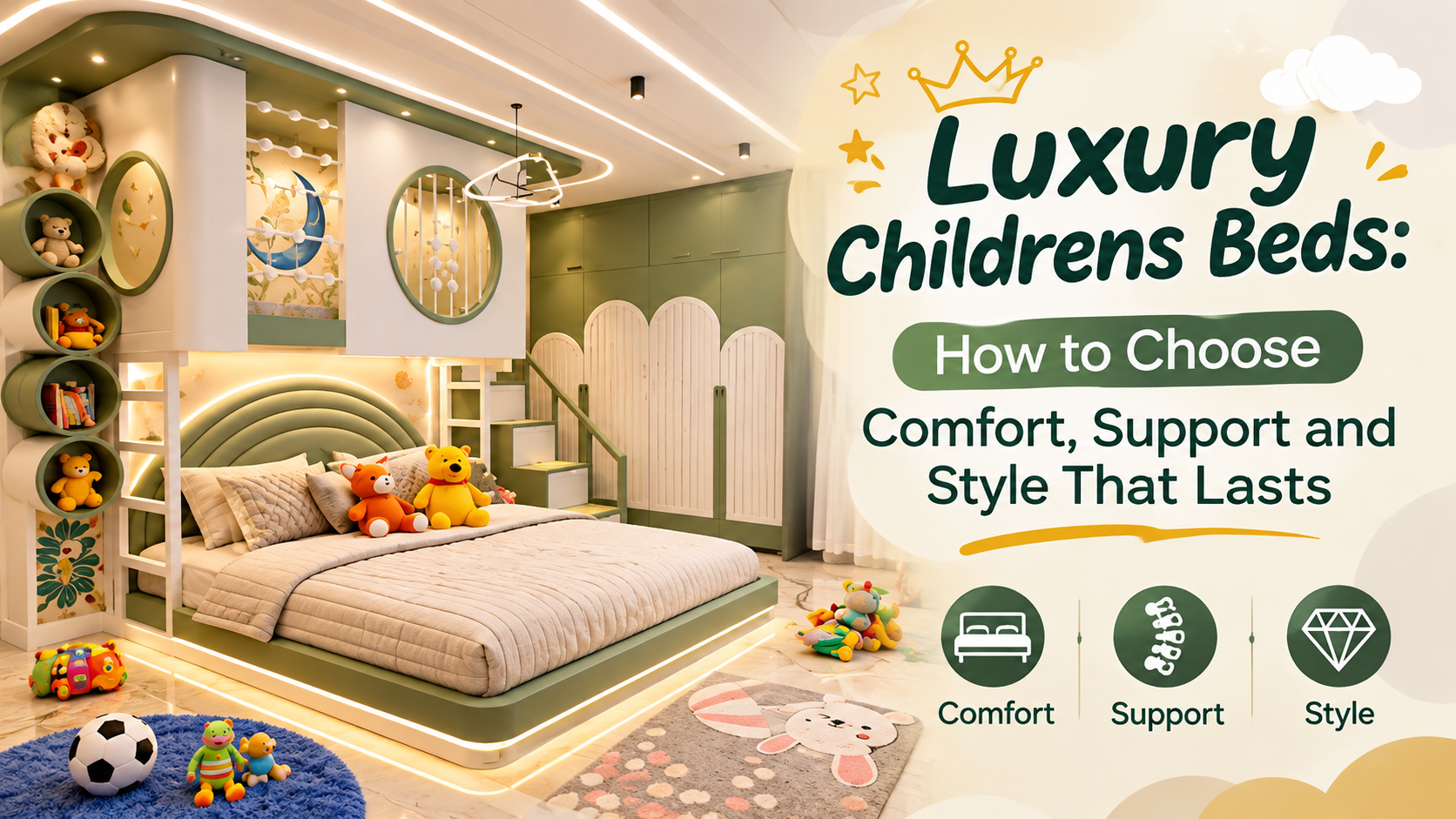
Luxury Childrens Beds: How to Choose Comfort, Support and Style That Lasts
Luxury Childrens Beds: How to Choose Comfort, Support and Style That Lasts
A child’s bed does many jobs. It’s a reading nook, a pillow fort, a place to talk through a bad day and, most importantly, where a growing body recovers every night. That’s why choosing luxury childrens beds is less about a price tag and more about getting four things right: support, safety, materials and design that grows with your child.
Many parents buy a cheap frame and a thin mattress, then replace both within a few years. A well-made bed and mattress can carry a child from their first “big kid” bed through the teenage years, with only the bedding changing along the way.
This guide shows you how to choose a premium bed, mattress and bedding for a child’s room. It also covers how to plan a family home where every bedroom feels comfortable and well designed.
Key takeaways:
- Support comes first. A growing spine needs a mattress that keeps it aligned, not one that sinks.
- Upholstered, storage and divan beds each suit different rooms, ages and needs.
- Hypoallergenic, anti-dust mite materials help sensitive sleepers breathe easier.
- Buying a bed that adapts as your child grows saves money over time.
- Good bedding protects your mattress and keeps the room looking fresh.
Quick Answer: What Makes a Children’s Bed Truly Luxurious?
A truly luxurious children’s bed combines a strong, well-built frame with a supportive mattress and breathable, skin-friendly materials. Premium options use solid timber frames, pocket springs or quality foams, hypoallergenic fabrics and a design that lasts for years. In short, luxury means a bed that feels great, looks great and still performs well long after a budget bed would have sagged.
Why Luxury Childrens Beds Are Worth the Investment
Children spend more time asleep than adults do. A school-age child may sleep 9 to 12 hours a night, so the bed shapes a big part of their day. Comfort affects how quickly they fall asleep, how often they wake and how rested they feel in the morning.
Quality also matters for durability. Kids sit, bounce, climb and play on their beds in ways adults rarely do. Cheap frames can loosen at the joints, and low-density mattresses often develop dips within a few years rather than decades. A sturdy frame and a reinforced mattress handle that daily wear far better.
Here’s a simple example: a family buys a budget single bed for a 6-year-old. By age 9, the slats creak and the mattress has a dip in the middle. They replace both. A better-built bed bought at the start could have lasted until the child left for university, which usually costs less overall.
Choosing Luxury Childrens Beds by Age and Stage
Your child’s age should guide the size, height and style you choose.
- Ages 3 to 6: A low single bed makes climbing in and out safe and easy. Choose rounded edges or a padded headboard, and keep the frame close to the floor.
- Ages 7 to 12: This is when storage becomes valuable. Toys, books and spare bedding pile up fast, so an ottoman or drawer base helps keep the room tidy.
- Ages 13 and up: Teens grow quickly and often want a more grown-up look. A small double or full double gives extra room, especially for tall teens or kids who share the bed with a pet now and then.
Tip: If you’re buying for a 10-year-old, think about the room they’ll want at 15. A neutral, classic frame adapts better than a themed design.
Bed Frame Styles for Children’s Rooms and Family Homes
Once you know the right size, the next step is choosing a frame style. Each option has clear strengths.
Upholstered Beds: Soft, Safe and Stylish
Upholstered beds have padded headboards and fabric-covered frames. They’re ideal for kids who like to read or watch shows sitting up in bed, because the soft headboard supports their back. Padded edges also feel gentler than hard wood or metal corners.
A style like the Grey Luxe Wingback Upholstered Bed shows how a classic wingback headboard can work in a child’s room and still look right years later. Neutral fabrics hide everyday marks better than pale or bright shades.
Ottoman Storage Beds: Hidden Space for Toys and Bedding
Storage beds are a smart choice for smaller bedrooms. A gas-lift ottoman base, such as the SmartLift Ottoman Storage Bed, opens up the whole area under the mattress for toys, seasonal clothes or spare duvets.
For extra-deep storage, a base like the SideLift Storage Divan Base offers a side-opening design. This makes it easier to reach items when the bed sits against a wall.
Safety note: An adult should open and close the lift mechanism for younger children. Show older kids how to use it safely before they do it themselves.
Divan Beds: Sturdy, Simple and Flexible
Divan beds sit on a solid base, which gives steady, even support for the mattress. They’re simple to set up and often come with storage options. A design like the Windsor Signature Divan, built with British timber and a platform top, offers long-term strength in a clean, classic shape.
Divans also suit guest rooms, which helps if a child’s room doubles as a spare room when grandparents visit.
When a Luxury Black Bed Works in a Child’s Room
Dark frames are growing in popularity, especially with older kids and teens. A luxury black bed creates a bold, modern focal point and hides scuffs better than light colors. It pairs well with white walls, wood floors and soft textiles that warm up the space.
For younger children, a dark frame works best in a bright room with plenty of natural light. Add colorful cushions or a patterned throw so the room still feels playful.
Mattress Support for Growing Bodies
The frame sets the look, but the mattress does the real work. Children’s spines and joints are still developing, so the mattress needs to keep the body aligned through the night.
Here’s what to look for:
- Pocket springs: Each spring moves on its own, so the mattress responds to the body’s shape. Mattresses like the 3000 Spine Align Pocket Hybrid Mattress use thousands of individual springs for even, targeted support.
- Hybrid designs: These combine springs with comfort layers, giving a balance of bounce and cushioning that suits most young sleepers.
- Memory and reflex foam: These layers ease pressure on shoulders and hips. The BackCore Blue Support Mattress pairs both foams for medium support.
- Reinforced edges: Kids sit on the edge of the bed a lot. Strong edge support stops the sides from sagging.
A common myth: “Firmer is always better.” That advice is outdated. A mattress that’s too firm can create pressure points, while one that’s too soft lets the hips sink. Medium to medium-firm support usually suits children best, because it keeps the spine straight without feeling hard.
Premium Materials That Matter
Luxury isn’t just about how a bed looks. It’s also about what it’s made from and how those materials affect sleep and health.
- Hypoallergenic and anti-dust mite materials: These are helpful for children with allergies, asthma or sensitive skin.
- Certified foams: CertiPUR-US certified foams are made without certain harmful chemicals, which gives parents extra peace of mind.
- Natural fibers: Wool and cotton knit covers breathe well and help regulate temperature.
- Solid timber frames: Quality wood resists warping and keeps joints tight over years of use.
- Durable upholstery: A wide fabric choice, such as 30-plus colors and finishes, lets you match the bed to the room while picking a hard-wearing material.
Here’s the key idea: premium materials protect your child’s comfort and health, and they help the bed last longer.
Choosing High End Bedding for Kids and Teens
Bedding finishes the bed and protects your investment. Good high end bedding feels soft, breathes well and holds up to frequent washing, which matters a lot with children.
Start with the essentials:
- A mattress protector: This guards against spills, accidents and stains. It also keeps the mattress hygienic and is often needed to qualify for trial returns.
- The right pillow: Pillows come in soft, medium and firm options. Younger kids usually need a lower, softer pillow, while older children who sleep on their side often need more support.
- Breathable sheets and duvet covers: Cotton and other natural fabrics help prevent overheating.
Color also shapes the mood of the room. Luxury gray bedding is a favorite with parents because it looks calm, hides small marks and suits almost any frame. It pairs well with an upholstered headboard and makes it easy to add bright accents that change as your child’s tastes change.
When you shop for high end bedding, look for strong stitching, colorfast dyes and fabrics that stay soft after many washes.
Bed Selection Table: Which Option Fits Your Child?
Use this table to compare the most popular choices.
|
Bed Type |
Best For |
Key Benefits |
Things to Consider |
|---|---|---|---|
|
Upholstered bed |
Readers, cozy rooms, all ages |
Padded headboard, soft edges, classic style |
Choose stain-resistant fabric |
|
Ottoman storage bed |
Small bedrooms, tidy rooms |
Hidden storage, gas-lift access |
Adult help for younger kids |
|
Side-lift storage divan |
Beds against a wall |
Easy side access, extra-deep storage |
Plan space for the opening side |
|
Divan bed |
Shared or guest rooms |
Solid support, simple setup |
Pick a headboard style you love |
|
Small double or double frame |
Tall kids and teens |
More room to stretch and grow |
Needs a larger room |
|
Hybrid mattress |
Most children |
Balanced support and comfort |
Match firmness to body weight |
|
Memory foam mattress |
Kids who feel pressure points |
Pressure relief, quiet sleep |
Look for responsive foams |
Common Mistakes to Avoid
- Buying for today only: A themed bed may delight a 5-year-old but frustrate a 9-year-old.
- Skipping the mattress upgrade: A beautiful frame with a thin mattress won’t give proper support.
- Ignoring room size: Measure the floor space, door swing and storage access before you buy.
- Choosing very pale fabrics: Light fabrics show marks quickly in kids’ rooms.
- Forgetting a protector: Small spills can shorten a mattress’s life without one.
Planning a Coordinated Family Home
Many families refresh more than one bedroom at a time. A shared design style makes the whole home feel calm and connected, even when each room has its own personality.
For the main bedroom, a double luxury bed with an upholstered headboard creates a restful retreat. You can repeat the same fabric color in a child’s single bed so the rooms feel linked. For example, a soft gray frame in the main bedroom can match luxury gray bedding in the kids’ rooms.
Teens often want something that feels more grown-up. Moving them to a double luxury bed gives them space to stretch out, study or relax with friends. A luxury black bed paired with neutral sheets can give a teen’s room a sleek, mature look without major redecorating.
If guests stay over often, a divan in the spare room keeps setup simple. For parents who want the best of both comfort and style, a double luxury bed with a supportive hybrid mattress is a dependable choice for years to come.
Frequently Asked Questions
What size bed should I buy for my child?
Most children start in a single bed between ages 2 and 4. Tall children and teens often move up to a small double or double. Consider both your child’s height and the room’s size.
What mattress firmness is best for children?
Medium to medium-firm usually works best. It keeps the spine aligned while still feeling comfortable. Very firm mattresses can create pressure points.
Are storage beds safe for kids?
Yes, when used correctly. Gas-lift ottoman beds should be opened by an adult for younger children. Teach older kids how to use the mechanism safely.
How long should a quality children’s bed last?
A well-built frame can last for many years, often through childhood and into the teenage years. A quality mattress usually lasts longer than budget options, especially with regular rotation and a protector.
Which materials are best for children with allergies?
Look for hypoallergenic and anti-dust mite materials, certified foams and breathable natural covers. Wash bedding regularly and use a mattress protector.
How do I care for my child’s mattress?
Rotate it every 3 to 6 months, use a protector to guard against spills and wash pillow covers often. These steps keep the mattress fresh and supportive for longer.
Can I try a mattress before committing?
Yes. Dreamoria offers a 100-night trial. Sleep on the mattress for at least 30 nights to let the body adjust, then decide if it suits your child.
Is delivery included?
Yes. Dreamoria offers free delivery on all orders, with mattresses compressed and rolled in recycled cardboard boxes for easier handling.
Give Your Child a Bed That Grows With Them
The right bed supports your child’s health, sleep and confidence every single night. Focus on a strong frame, a supportive mattress, breathable materials and bedding that is easy to care for. When you get those basics right, luxury childrens beds become a long-term investment rather than a short-term purchase.
Start by measuring the room, noting your child’s age and sleep habits, and deciding whether storage matters. Then explore Dreamoria’s upholstered beds, storage beds, divans and mattresses, all made in Britain with comfort and support at their core. With free delivery and a 100-night trial, you can choose with confidence and give your child the restful sleep they deserve.