

No products in the cart.
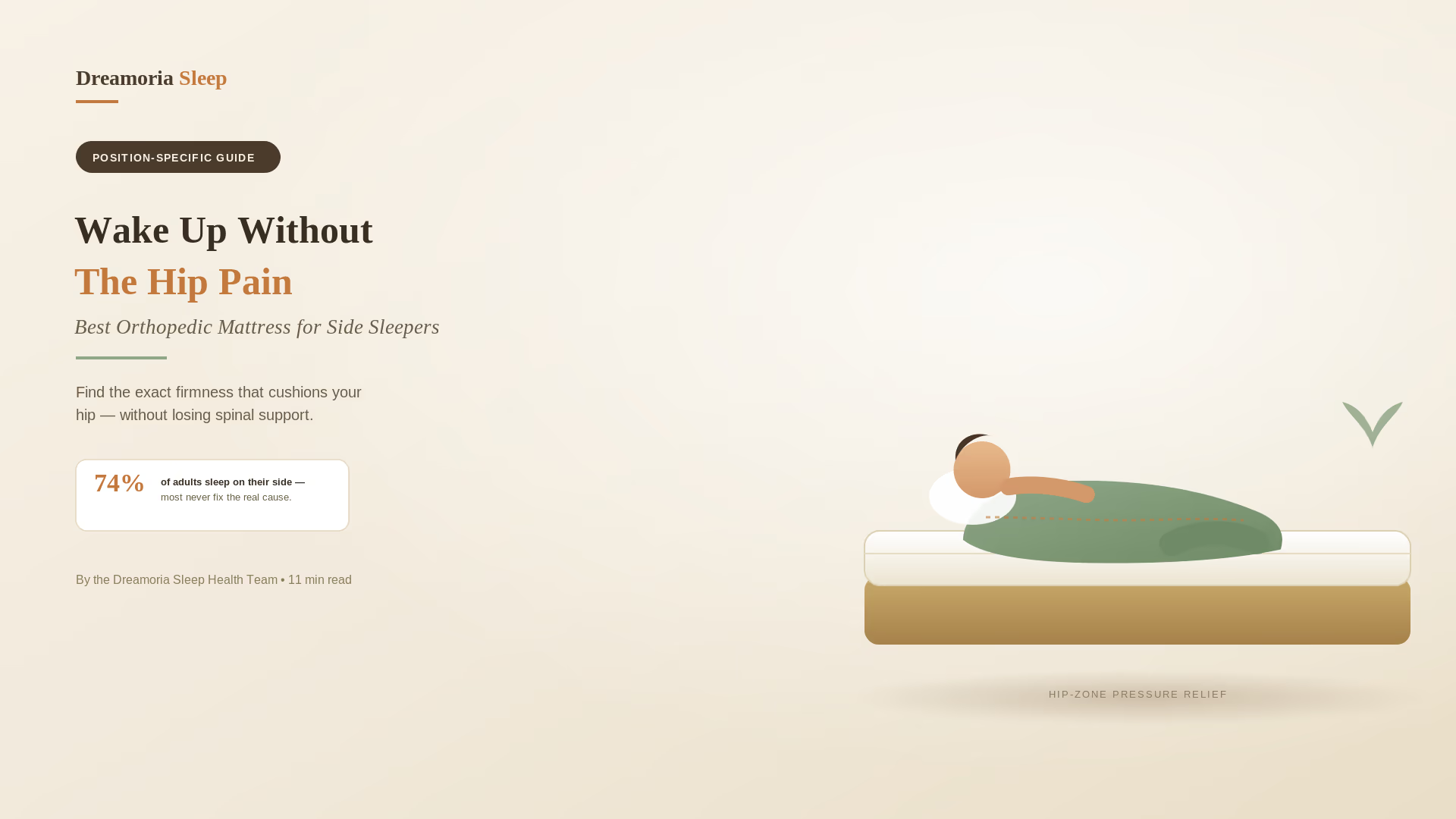
Best Orthopedic Mattress for Side Sleepers With Hip Pain – Dreamoria Sleep
Dreamoria Sleep — Position-Specific Support
Best Orthopedic Mattress for Side Sleepers With Hip Pain
Find position-specific support: why side sleeping concentrates pressure directly on the hip, what firmness actually relieves it, and how to choose an orthopedic mattress built for the way you really sleep.
By the Dreamoria Sleep Health Team • 11 min read • Updated July 2026
If you’re searching for the best mattress for side sleepers with hip pain, you’ve probably already noticed the pattern: the ache is worst first thing in the morning, concentrated on whichever hip you favour, and it eases once you’re up and moving. That’s not a coincidence — it’s a direct result of how side sleeping distributes your body weight. Roughly 74% of adults sleep on their side, and the hip carries more of that load than any other joint. This guide breaks down exactly what an orthopedic mattress for hip pain needs to do differently, and how to choose one with confidence.
1
Why Side Sleeping Concentrates Pressure on the Hip
When you lie on your side, your body weight isn’t distributed evenly the way it is on your back — it funnels through two narrow points: the shoulder and the hip. The hip, being wider and heavier, typically bears the greater share. On a mattress that’s too firm, this creates a hard contact point that restricts blood flow and triggers the small, repeated wake-ups (called micro-arousals) your body uses to shift position. You rarely remember these movements, but they fragment deep sleep and leave the hip joint under sustained, uneven pressure for hours.
From a psychological standpoint, this matters more than people expect. Chronic, low-grade pain that disrupts sleep doesn’t just make you tired — it lowers your pain threshold the next day, making the same hip ache feel more intense than it did the morning before. Fixing the sleep surface often improves both problems at once, which is exactly why position-specific support isn’t a luxury feature — it’s the actual mechanism that determines whether you wake up stiff or rested.
Where Pressure Builds for Side Sleepers
Highest pressure — hip
High pressure — shoulder
High pressure — shoulder
2
The Best Mattress Firmness for Side Sleepers With Hip Pain
Firmness is the single most searched, and most misunderstood, factor in this decision. For side sleepers dealing with hip pain, the sweet spot generally sits at medium-soft to medium — around 5 to 6 on a 10-point firmness scale. Soft enough to cushion the hip and shoulder, firm enough underneath to stop the spine sagging out of alignment. Go too firm and the hip takes the full brunt of your body weight with no give. Go too soft and the hip sinks so far that your spine curves out of its neutral line, creating a different kind of strain by morning.
The Side-Sleeper Firmness Zone
SoftMedium-SoftMediumMedium-FirmFirm
Body weight shifts this range slightly. Lighter side sleepers (under roughly 60kg) often do best nearer medium-soft, since less weight means the mattress needs less resistance to still cushion the hip properly. Heavier side sleepers (over roughly 90kg) usually need to sit closer to medium, so the hip doesn’t sink so far that the spine loses its neutral line. This is one reason a generic “firm mattresses are best for pain” recommendation misses the mark for side sleepers specifically — the ideal number depends on body weight as much as sleep position.
3
Spinal Alignment for Side Sleepers: What Good Support Looks Like
Lying on your side, a neutral spine means your shoulders, hips and head stay in one straight line, parallel to the mattress. The most common failure point isn’t the pillow — it’s the hip sinking too far into an overly soft mattress, or being pushed up by one that’s too firm to allow any cushioning at all.
Hip Alignment: Poor vs. Position-Specific Support
Too Firm — Hip Unsupported
Spine bows upward at the hip
Position-Specific Support
Hip cushioned, spine level
4
Memory Foam vs. Hybrid: Which Relieves Hip Pain Better?
Both materials show up constantly in searches for the best mattress for side sleepers with hip pain, and for good reason — each solves part of the problem differently.
Memory Foam
Contours closely around the hip and shoulder, spreading pressure across a wider surface. Excellent for pinpoint pressure relief, though it can retain heat.
Best for: focused hip pressure relief
Hybrid (Coil + Foam)
A foam comfort layer cushions the hip while a pocket-spring base stops it sinking too far, keeping the spine level. Sleeps cooler than all-foam builds.
Best for: pressure relief plus spinal support
“
For a side sleeper with hip pain, the goal isn’t the softest mattress or the firmest — it’s the one that cushions the hip while keeping the spine level. Everything else is secondary.
— Dreamoria Sleep Health Team
5
Beyond the Mattress: Supporting a Side-Sleeping Position
1
A pillow between the knees
Keeps the hips stacked and takes rotational strain off the lower back.
2
A supportive pillow height
Should fill the gap between shoulder and ear without tilting the neck.
3
A topper if you’re not ready to replace
A soft topper can add temporary hip cushioning to an overly firm mattress.
4
Alternate your favoured side
Gives the more painful hip periodic relief from sustained pressure.
6
Signs Your Mattress Is Making Hip Pain Worse
If hip pain is worst on waking and eases within 30 to 60 minutes of moving around, your mattress is the leading suspect rather than an underlying joint issue. Waking repeatedly to switch sides, feeling a hard pressure line along the hip, or sleeping noticeably better on a hotel or guest bed are all signals that your current mattress isn’t giving your hip the position-specific support it needs. A mattress over 7 years old is also worth scrutinising even if it still looks fine — foam and pocket springs lose their designed responsiveness well before the surface shows visible wear, which is often the quiet reason hip pain creeps in gradually rather than appearing overnight.
Whatever you choose, treat the first few weeks as a genuine trial rather than a verdict on night one. Spinal alignment and pressure relief both improve as your body adapts to a new surface, so judge a mattress on how your hip feels after two consistent weeks of sleep, not the first uncomfortable night in an unfamiliar bed.
Hybrid Mattresses
Foam pressure relief over a supportive coil base — built for side sleepers.
Orthopaedic Mattresses
Zoned firmness engineered for existing hip and joint pain.
7
Common Questions
What firmness is best for side sleepers with hip pain?
Medium-soft to medium, roughly 5–6 on a 10-point scale, cushions the hip while still supporting the spine.
Is memory foam or hybrid better for hip pain?
Memory foam gives the deepest pressure relief; hybrid adds firmer underlying support so the hip doesn’t sink too far. Many side sleepers with hip pain do best on a hybrid.
Can a mattress topper fix hip pain on a firm mattress?
A soft topper can help temporarily, but if the base mattress no longer supports your spine, a topper only masks the underlying issue.
How do I know if it’s the mattress or my hip joint?
Pain that’s worst on waking and fades within an hour points to the mattress. Persistent pain throughout the day is worth discussing with a healthcare professional.
Does body weight change which firmness I should choose?
Yes. Lighter side sleepers generally suit medium-soft, while heavier side sleepers usually need closer to medium so the hip doesn’t sink too far and pull the spine out of alignment.
How long does it take to adjust to a new mattress?
Most people notice reduced hip pressure within the first week, with full adjustment over 2–4 weeks as the body adapts to proper alignment — which is why a genuine trial period matters.
Find Your Position-Specific Match
Take Dreamoria’s two-minute sleep quiz and get matched to the firmness and support your hips actually need.
© 2026 Dreamoria Sleep. All rights reserved.