

No products in the cart.
Dreamoria
Sleep Science · Guide
Sleep Science · Guide
10-year warranty
100-night trial
Free UK delivery
30,000+ verified reviews
Sleep Science · Firmness Guide
What mattress firmness is best for back pain?
Soft, medium, or firm — the label on the box rarely matches what your spine actually needs. Here’s how to find your level without guessing.
9 min read · Based on clinical trials and sleep-lab research
Our verdict
Medium-firm, personalised
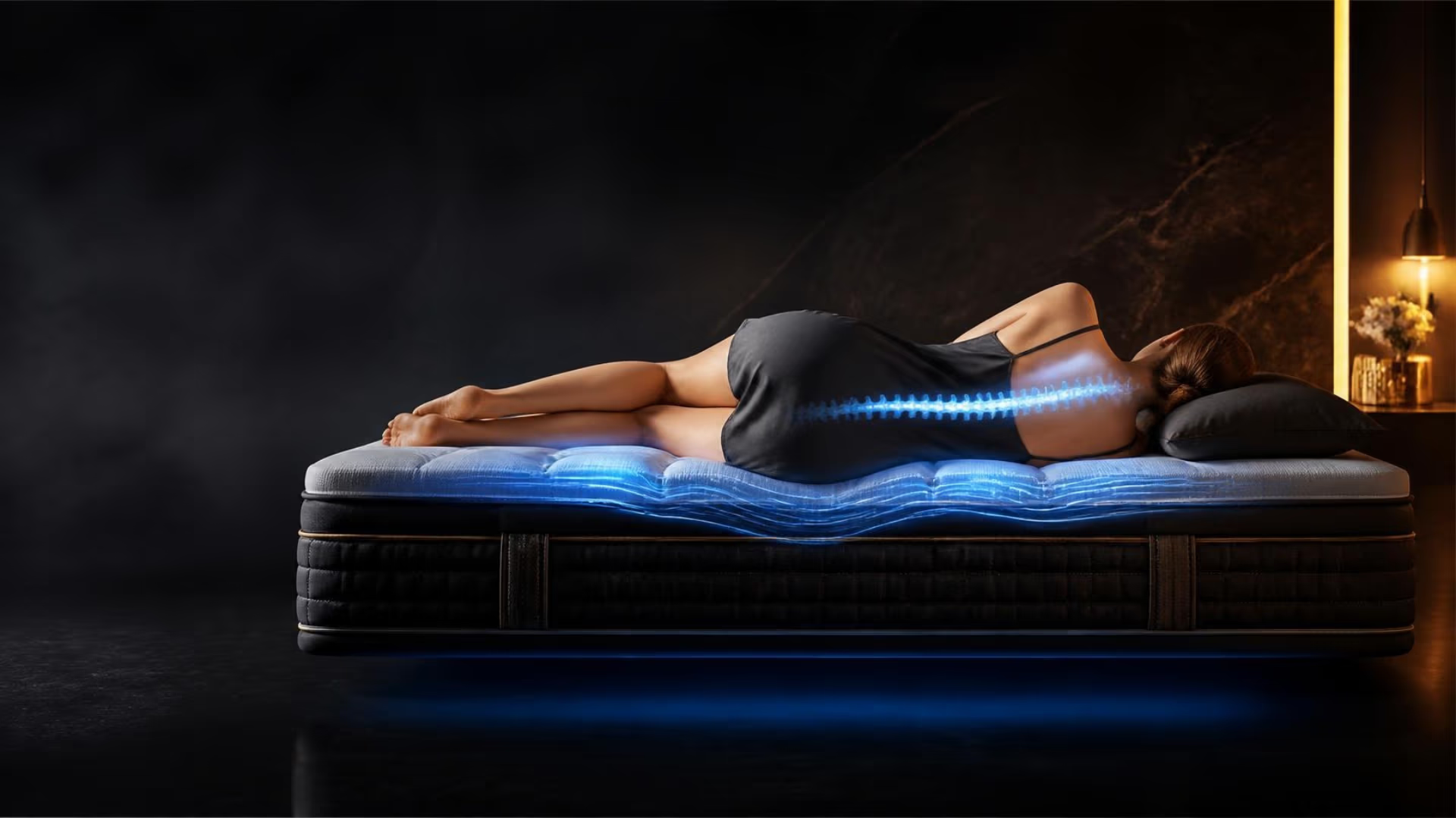
The right firmness depends on your body weight and sleep position — not a single number that works for everyone.
In this guide
01 · The firmness scale, explained
02 · What your body actually needs
03 · How to choose without guessing
04 · Frequently asked questions
Ask five people what firmness helps back pain and you’ll get five different answers. Some swear by a rock-hard base, convinced that softness equals sagging. Others insist a plush surface is the only thing that stops them waking up stiff. The truth is that firmness isn’t a fixed scale with one correct answer — it’s a relationship between your body and the mattress, and that relationship changes with your weight, your usual sleep position, and even how your muscles have adapted to years of poor support. Chasing a single “best” firmness number is what leads most people to buy the wrong mattress twice. What actually matters is whether the surface keeps your spine in a neutral line all night, and that’s a very different question from how hard the mattress feels when you press it with your hand in a showroom.
2003
Landmark trial of 313 adults finds medium-firm beats firm for chronic back pain
2011
Sleep-lab studies link body-weight mismatch to overnight spinal misalignment
2019
Pressure-mapping research confirms zoned support reduces tossing and turning
2026
Firmness-matching by weight and position becomes the standard sleep-industry guidance
The firmness scale, explained
The myth
A bad back needs the firmest mattress you can find. The harder the surface, the more “support” it gives, and softness is just a comfort compromise that lets your spine sag.
The evidence
Clinical trials consistently show medium-firm mattresses outperform firm ones for chronic low back pain. A surface that’s too hard doesn’t flex under your hips and shoulders, so your spine is forced out of alignment instead of being held in it.
3
factors that actually determine your ideal firmness — body weight, sleep position, and spinal alignment, not personal preference alone
“Firmness should be described by what it does to the spine, not by how it feels under a palm in a showroom.”
— Common finding across sleep-medicine and orthopaedic firmness studies
What your body actually needs
Body weight changes everything
Heavier bodies sink deeper into any given surface, so a mattress that feels medium to a lighter sleeper can feel soft — even collapsing — under someone heavier. Sleepers over roughly 90kg usually need a denser, more resistant support core so the hips and shoulders don’t sink past the natural curve of the spine. Lighter sleepers, on the other hand, often find true firm mattresses uncomfortable no matter what the label promises, because there isn’t enough give to relieve pressure at the shoulder and hip.
Sleep position decides where you need give
Side sleepers carry more pressure through the shoulder and hip, so they generally need a touch more softness at the surface layer to avoid pain points, paired with firmer support underneath. Back and stomach sleepers need a flatter, more even surface to stop the lower back from arching or sinking. Trying to use one firmness for every position is one of the most common reasons back pain doesn’t improve even after buying a new mattress.
Quick checklist before you buy
✓Know your usual sleep position — side, back, or stomach — since it changes where you need softness.
✓Factor in body weight, not just personal firmness preference.
✓Look for zoned support layers, not just an overall firmness rating.
✓Commit to at least a two to three week trial before judging comfort.
How to choose without guessing
Firmness isn’t something you can reliably judge by lying on a mattress for two minutes in a showroom. Your body needs hours of real sleep to reveal whether a surface is holding your spine level or letting it drift out of position. That’s why the most reliable approach is to start from your own numbers — your weight, your dominant sleep position, and any spot where you currently wake up sore — rather than starting from a firmness label that means something different at every mattress brand.
If you’re between two firmness levels, or you sleep in a mix of positions through the night, a hybrid design that combines supportive springs with a contouring comfort layer often solves the problem without forcing a compromise. For sleepers who specifically need firmer, more structured support, Dreamoria’s orthopaedic range is built around zoned support rather than uniform hardness, so pressure is distributed instead of concentrated at the hips and shoulders.
If guessing still feels risky, that’s exactly what a proper fit assessment is for. Dreamoria’s mattress selection quiz takes under a minute and matches you to a firmness level based on your weight, position, and current pain points, rather than leaving you to interpret a soft-medium-firm label alone. And if your back pain is severe, sudden, or persists for more than a few weeks regardless of what you sleep on, it’s worth checking the NHS guidance on back pain and speaking with a GP, since a mattress alone can’t resolve pain with an underlying medical cause.
Frequently asked questions
Is firm or medium-firm better for back pain?+
For most people, medium-firm outperforms firm. Clinical research has repeatedly shown medium-firm mattresses reduce chronic low back pain and disability more effectively than very firm surfaces, largely because firm mattresses resist the spine’s natural curve instead of supporting it.
Does body weight really change which firmness I need?+
Yes. Heavier sleepers sink deeper into any surface, so they typically need a firmer, denser support core to stay aligned. Lighter sleepers sink less and often find truly firm mattresses uncomfortable, since there’s not enough give to relieve pressure points.
How do I know if my current mattress firmness is wrong for me?+
Common signs include waking with stiffness or pain that eases once you’re up and moving, visible sagging or body impressions, or needing to switch positions repeatedly through the night to stay comfortable.
Can a mattress quiz actually tell me the right firmness?+
A well-built quiz that accounts for weight, sleep position, and existing pain points can narrow the range far more reliably than guessing from a showroom firmness label, though a real trial period is still the final test.
100-night trial · free returns
Find your firmness without the guesswork
Answer a few quick questions and get a mattress recommendation matched to your body and sleep position.
Comments are closed