

No products in the cart.
● Free room-of-choice delivery
● 30-day returns
● UK manufactured
● 5-year warranty
SLEEP SCIENCE · DURABILITY GUIDE
How long should an orthopedic mattress last?
It’s not just about years on the calendar — it’s about how long the support actually holds up. Here’s what genuinely determines an orthopedic mattress’s lifespan, in numbers first, then in detail.
~2–3 yrs Typical for low-density foam or basic open-coil builds | ~3–4 yrs Typical for mid-tier foam or standard pocket springs | 5 yrs High-density core or quality pocket springs — matched by Dreamoria’s warranty |
Explore the detail
Tap a question to expand it.
Average lifespan by mattress type
Lifespan isn’t a fixed number stamped on the box — it’s a range, and where a mattress falls in that range depends far more on what’s inside it than on how many years have technically passed. Low-density foam and basic open-coil mattresses can start losing support within 2 to 3 years. High-density foam, natural latex, and individually pocketed spring systems with a reinforced base are built to hold consistent support for around 5 years — which is exactly why Dreamoria backs every orthopaedic mattress with a matching 5-year warranty.
A mattress can also look perfectly fine on the surface for years after its support core has already started failing underneath, which is why so many people keep sleeping on a mattress that’s quietly working against their back without realising it.
What actually shortens the lifespan
Support core density and material is the single biggest factor. Low-density foam compresses and loses recovery far faster than high-density foam, and open-coil springs sag more predictably than individually pocketed springs that respond independently to body weight.
Body weight and how the mattress is used matters too — a support core rated for lighter sleepers will compress faster under heavier or shared use, regardless of how firm it felt when new.
The base it’s sitting on can undermine even a well-built mattress. Slats spaced too far apart, a sagging divan, or an unsupportive base will shorten the effective lifespan of the mattress on top of it.
Signs it’s time to replace, and how to extend it
The most reliable signal isn’t age on paper — it’s how you feel getting up in the morning compared to a year or two ago. Gradual stiffness, soreness, or sleeping noticeably better away from home are stronger indicators than counting years since purchase.
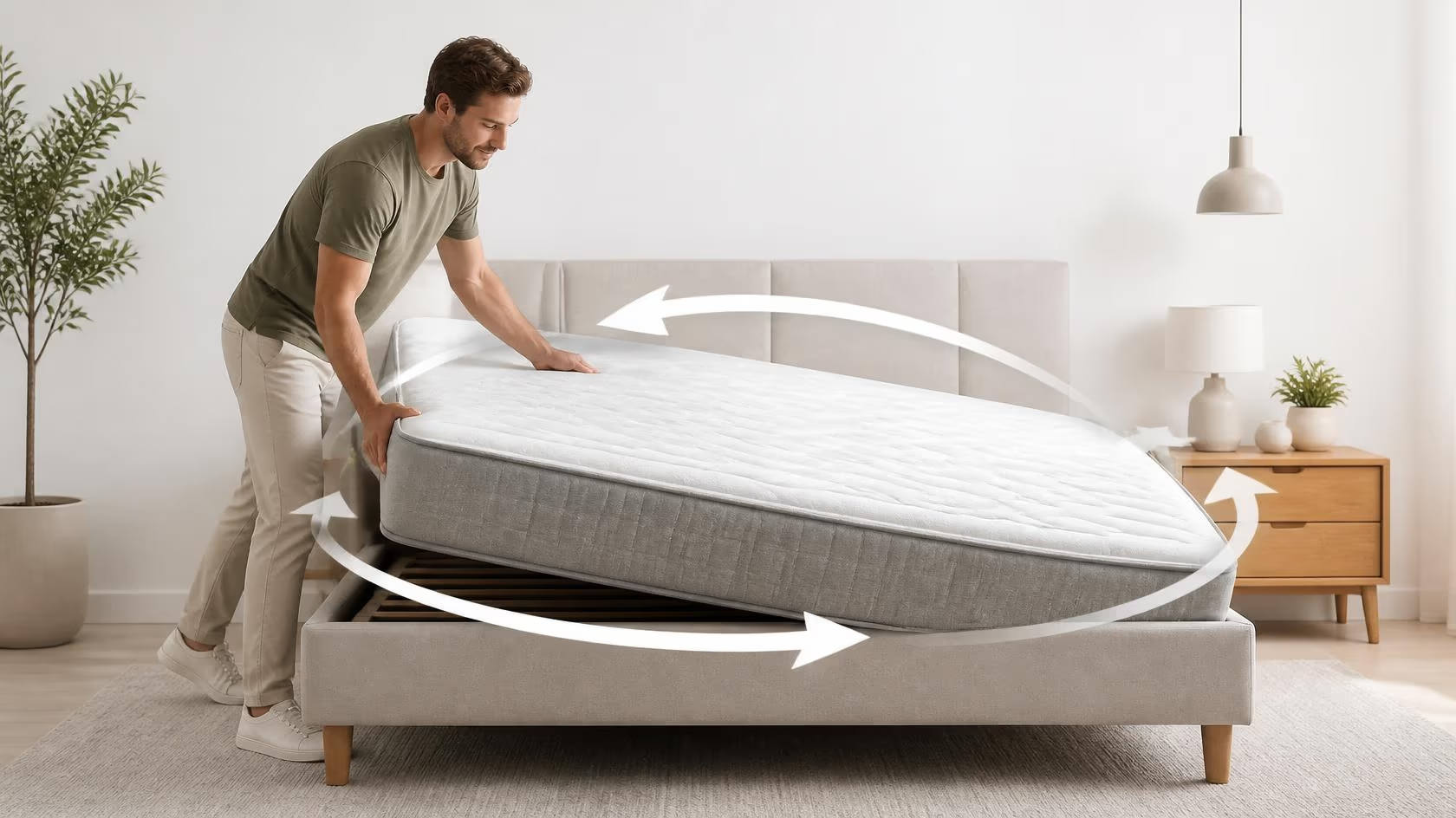
You can genuinely extend a mattress’s working life: rotate it regularly, use a base that properly supports it, and match firmness to body weight from the start rather than choosing on feel alone. If you’re replacing a mattress now, Dreamoria’s mattress fit quiz matches firmness to your weight and sleep position, and the orthopaedic range is built around high-density cores and reinforced bases, backed by a 5-year warranty on every model.
Signs your mattress has reached the end of its life
✓ Waking up with stiffness or pain that wasn’t there a year or two ago.
✓ A visible dip or body impression that doesn’t fully recover after you get up.
✓ Sleeping noticeably better in a different bed, like a hotel or guest room.
✓ Springs or firmness that feel uneven from one side of the mattress to the other.
If back pain has been building regardless of how new or old your mattress is, that’s worth treating as a separate issue from mattress lifespan. It’s worth checking the NHS guidance on back pain and speaking with a GP, since a mattress supports your spine but can’t resolve pain that has an underlying medical cause.
Frequently asked questions
How long should an orthopedic mattress last on average?
A well-built orthopedic mattress with a high-density support core or quality pocket spring system should typically last around 5 years, which is why Dreamoria backs its orthopaedic range with a matching 5-year warranty. Lower-quality builds can start losing support within 2 to 3 years.
Can a mattress look fine but still need replacing?
Yes — support cores can lose density and responsiveness well before any visible sagging appears on the surface, which is why how you feel in the morning is a more reliable signal than appearance alone.
Does body weight affect how long a mattress lasts?
Yes. A support core rated for a lighter sleeper will compress faster under heavier or shared use, so checking the manufacturer’s recommended weight range matters for long-term durability, not just initial comfort.
Does the bed base affect mattress lifespan?
Yes, significantly. A weak or unsuitable base, such as widely spaced slats or a sagging divan, can cause uneven wear and shorten the effective lifespan of an otherwise well-built mattress.
5-year warranty · 30-day returns
Ready for a mattress built to last?
Take the fit quiz to find an orthopedic mattress matched to your body weight and sleep position, backed by a 5-year warranty.
Comments are closed